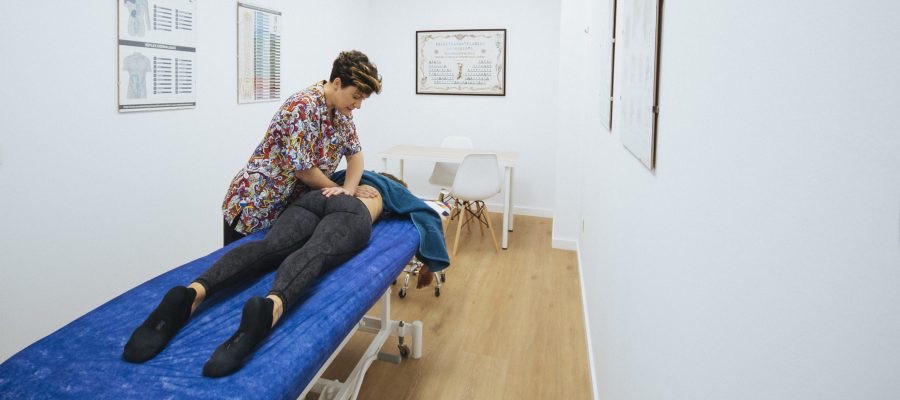
At Clínica Mà i Cos we have practitioners qualified in this therapeutic discipline, which delivers very positive results for our patients. We are delighted to be a point of reference as an osteopathy clinic in Sagunto.
What is osteopathy?
Osteopathy is a therapeutic discipline and a body of specific knowledge based on:
- the anatomy and physiology of the human body.
- an understanding of how the different tissues take part in producing illness.
- the application of techniques that normalise altered functions.
The difficulty of our profession lies in arriving at a good diagnosis, since we normally do not rely on any complementary diagnostic tests. It is observation through validated osteopathic and orthopaedic tests, together with knowledge of the human body, that allows us to find the dysfunction.
How does osteopathy work?
Osteopathy therefore works by respecting and supporting the body’s own self-regulation in any condition, rather than making it dependent on purely external or passive solutions such as the sometimes excessive use of medication.
Osteopathy promotes or restores homeostasis, the mechanical balance of all the body’s tissues: musculoskeletal, nervous, visceral, circulatory and so on. It does so by applying manual techniques to the tissues that may show dysfunction or pathology, identified beforehand through osteopathic functional diagnosis.
The motto of our physiotherapy and osteopathy clinic in Sagunto is: “Find the problem, and let it heal itself.”
What can osteopathy treat?
As we mentioned above, osteopathy considers the body as a whole, both for assessment and for treatment. It is divided into three broad groups, depending on the tissues it works on:
STRUCTURAL OSTEOPATHY
Aimed at the musculoskeletal system: bones and joints, muscles, tendons, ligaments, fascia and so on. Here we apply a range of techniques adapted to each dysfunction, each tissue and each patient, with continuous analysis and reassessment of the state of the tissues during the session so we know which technique is best to apply next. It is not a matter, as many people think, of applying manipulation or thrust techniques alone. Structural osteopathy, like the others, has a wide variety of techniques for treating different dysfunctions, so that we can apply the most appropriate one for each injury.
VISCERAL OSTEOPATHY
This works on the tissues involved in the functioning of the internal organs: the related fibrous membranes or fascia of visceral coalescence, the muscles, the different sliding planes between organs, the blood vessels and the nerves. All the tissues that keep the organs working need to move freely along their anatomical path, which does not always happen and may be due to adhesions or myofascial traction that restrict the normal mobility of the organs. Visceral manual techniques help to release interruptions in that flow of movement, giving the body a more useful, productive and healthy functional base.
These interruptions in the smooth movement of an organ can be influenced, for example, by scars or invasive procedures, which may create retraction in the surrounding tissue and with it restrictions in movement. That hinders the organ from working properly, and leads to poor nourishment of the tissues through a reduced blood supply, poor visceral drainage and so on.
For example, one of the main conditions treated through visceral osteopathy is constipation or poor bowel function, since not going to the toilet with optimal frequency, regularity and quality can bring on many other problems in the body.
CRANIAL OSTEOPATHY
This also works through manual techniques, releasing and supporting the micro-mobility of the skull and the craniosacral relationship as a whole, through the meningeal membranes of the nervous system and the role of the cerebrospinal fluid. Some consequences of postural alterations (scoliosis), trauma (whiplash from road accidents) and muscular imbalance (bruxism and poor dental occlusion) can affect cranial nerves, arteries, glands and other tissues as they pass through the openings of the skull or inside it. That can cause neuralgia, difficulties with vision or hearing, changes in some glandular functions, vertigo and migraine, and even, through the autonomic nervous system, digestive, respiratory and vascular disorders.