What is bruxism?
Temporomandibular dysfunction, whether in the joint or the muscles, can cause discomfort that also affects people’s daily lives. Because of the pace of life we lead, cases of bruxism are on the rise.
This habit of clenching or grinding the teeth ends up overloading the muscles, which leads to neck pain, headaches, facial or dental pain and ear discomfort such as pain, buzzing or ringing.
With the help of physiotherapy and osteopathy we can ease the consequences of these habits, which are hard to control because they happen unconsciously.
How is bruxism treated?
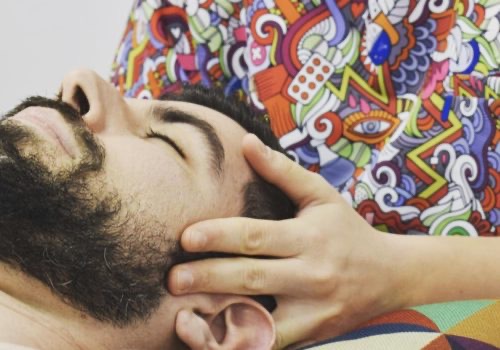
Full treatment of this joint is multidisciplinary: several health professionals take part, such as dentists or maxillofacial surgeons, alongside the physiotherapist. The physiotherapist focuses assessment and treatment on the neuromusculoskeletal elements of the joint (muscles, ligaments, nerves), through manual treatment such as mobilisation or massage and physical agents such as cold.
They also play an important role in movement reeducation and in the habits that prevent future problems or improve the current one.
How we can help at our clinic
At Clínica Mà i Cos we consider the correct functioning of the stomatognathic system to be vitally important to health. As well as being one of the main sources of neck, cranial and orofacial pain when it is not working properly, it is an important regulator of posture, so problems with it have general repercussions throughout the body.
Given how complex this system is, we believe a multidisciplinary approach to its disorders is essential. From physiotherapy, we can:
- Restore normal movement, and therefore function, of the temporomandibular joint and the cervical spine.
- Improve the relationship between the disc and the condyle.
- Re-establish muscular balance and normal muscle tone.
- Re-educate the patient in correct postural habits.
- Improve motor control and temporomandibular proprioception, and its coordination with the craniocervical region.
To that end, at Mà i Cos we have practitioners with extensive core training who have also specialised in the stomatognathic system through postgraduate study. To work on this region we use:
- Osteopathic therapy: through our whole-body approach as osteopaths, we treat the patient as a whole, analysing the elements of the body that may be altering normal function of the temporomandibular joint.
- Contemporary manual therapy: based on thorough clinical reasoning drawing on the most current concepts in manual therapy, we use various techniques to support decoaptation, the disc–condyle relationship and so on, according to the needs of each case.
- Dry needling of myofascial trigger points: alongside manual soft-tissue techniques (ischaemic pressure, massage, stretching), we are trained in dry needling for cases where manual work alone is insufficient or incomplete.
- Neuromeningeal mobilisation of the cranial nerves: in many cases of stomatognathic dysfunction, neuromeningeal mobilisation of nerves such as the facial nerve or the mandibular branch of the trigeminal has proved very useful in reducing pain and improving neuromuscular control.
- Therapeutic and motor control exercise: we use therapeutic exercise as a way of strengthening and prolonging the effects of our treatment, and of encouraging an active attitude in the patient towards their problem.