At Clínica Mà i Cos we can support you throughout pregnancy and accompany you as you prepare for birth, through any bumps along the wonderful road to meeting your baby, and through those that may appear afterwards during the postpartum period and early parenthood.
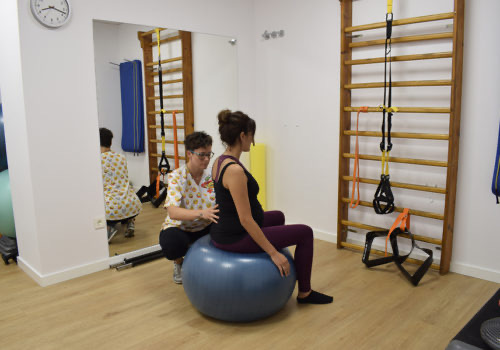
- We will help you stay fit during pregnancy, so you are as agile and strong as possible, with antenatal physical preparation classes either one to one or in small groups.
- We will teach you the work needed to strengthen the pelvic floor throughout pregnancy, to avoid urine leakage and discomfort.
- From week 34 we will teach you perineal massage, to avoid tearing or an episiotomy as far as possible.
- At the end of pregnancy, once it is considered full term, we hold a birth preparation session proper. In other words, we treat the mother to help the birth unfold spontaneously and as easily as possible.
- After the birth it is essential to give the mother a full check-up, to look for and treat any after-effects of pregnancy and delivery. That helps recovery to be as quick as possible and leaves the mother feeling well enough to face the postpartum period and caring for her baby.
- We can also help and advise you on breastfeeding and any problems that may arise with it.
Why physical preparation matters during pregnancy
Over the 40 weeks of pregnancy, a woman’s body goes through a metamorphosis in every sense, one that can push the body to its limit at certain moments.
At a musculoskeletal level, as the end of pregnancy approaches the centre of gravity shifts, forcing the lower back to increase its physiological lordosis. That ends up producing a hyperlordosis, so the lumbar facet joints press together and the muscles tighten, causing lower back pain. At the same time the sacroiliac joints of the pelvis are forced to move more, which causes inflammation in those structures (sacroiliitis). All the weight the mother gains is carried by the feet and knees, which usually end up swelling because of poor circulation in the area, caused by the pressure the bump places on the inguinal lymph nodes.
At a systemic level, all the internal organs are affected, because the baby takes up the space they normally occupy. Their mobility is reduced and their function is somewhat altered.
Because of this, the mother may experience urine leakage and urinary infections, poor digestion and reflux, constipation and wind, gestational diabetes, high blood pressure, liver congestion, fatigue and so on.
All of the above may sound like an exaggeration, but it is genuinely what happens. Some women suffer it more than others depending on their physical and general health before pregnancy, but above all depending on whether they stay as active and as fit as possible during it.
Exercise and a healthy life (diet, rest and so on) are the only tools that can make all these symptoms as manageable as possible. Doing cardiovascular exercise during pregnancy, for example, helps keep the circulation working well and so avoids swollen legs and pain in the feet, knees and hips, and even constipation. In the same way, strength work helps you feel more agile, cope better with the extra weight and have less back pain.
And do not forget that at the end of pregnancy comes the birth!
Birth is not something to fear, but you do need to be aware that it is an endurance event, and that in first-time mothers it is considered normal for it to last 12 hours or more.
So the fitter we are, the better we will cope both with the muscular fatigue of dilation and delivery and with the cardiovascular fatigue of the effort the whole process demands.
It is also worth bearing in mind that the better our physical condition during pregnancy and birth, the faster the recovery will be afterwards and through the postpartum period.
And remember that after all of it we still have to look after the baby, which takes a great deal of energy and effort. The baby gains weight day by day and we have to carry them, for most things and for at least the first year: feeding, nappy changes, getting them to sleep, settling them and so on.